

A detailed comparison of construction management and general contracting in Dubai — covering contract types, fee structures, risk profiles.
When a developer, investor, or building owner in Dubai begins planning a significant construction project, one of the earliest and most consequential decisions is how to structure the delivery. Should the owner hire a general contractor to build from a completed design? Or should they bring in a construction manager to represent their interests from the earliest planning stages? The two models share some surface similarities — both involve experienced construction professionals overseeing a build — but they allocate risk, cost, and control in fundamentally different ways.
Getting this decision wrong creates problems that compound through the entire project lifecycle. A general contractor appointed at the wrong stage reduces the owner's influence over cost. A construction manager appointed without the right scope leaves the owner holding risks they assumed had been transferred. In Dubai's current market, where the UAE construction industry is valued at USD 42.75 billion in 2025 and is expected to reach USD 52.66 billion by 2030 according to Mordor Intelligence, developers and investors face an increasingly sophisticated procurement environment that rewards informed delivery model selection.
This guide explains both roles in technical detail, maps the contract structures that govern each, provides fee benchmarks for the UAE market, and gives a practical framework for deciding which model fits your project.

Why the Delivery Model Decision Matters in Dubai Specifically
Dubai's construction market operates under a set of conditions that make project delivery structure more consequential than in many other markets.
First, the pipeline is enormous. The federal Projects of the 50 programme and the Dubai 2040 Urban Master Plan together anchor a USD 700 billion capital pipeline, sustaining multi-year demand for feasibility, master planning, and project management services across the emirate. Projects of every size and type are in delivery simultaneously — luxury villa communities, mixed-use towers, hospitality developments, and infrastructure.
Second, contractor capacity is constrained. With Dubai alone accounting for 41.6% of all UAE construction activity, the pool of experienced general contractors and construction managers capable of handling complex projects is finite. Choosing the wrong delivery model — or appointing the wrong party too late — limits access to the best teams.
Third, the regulatory environment adds meaningful complexity. Dubai Municipality's Building Permit System, DCD fire safety approvals, DEWA load allocations, and free zone authority requirements all have implications for how a project is set up contractually. A construction manager appointed from pre-design can shape the authority approval strategy from the start. A general contractor appointed after design completion inherits whatever approval structure the consultant created — including its inefficiencies.
Understanding how to manage large-scale construction projects efficiently begins with getting the delivery structure right before ground is broken.
What a General Contractor Does
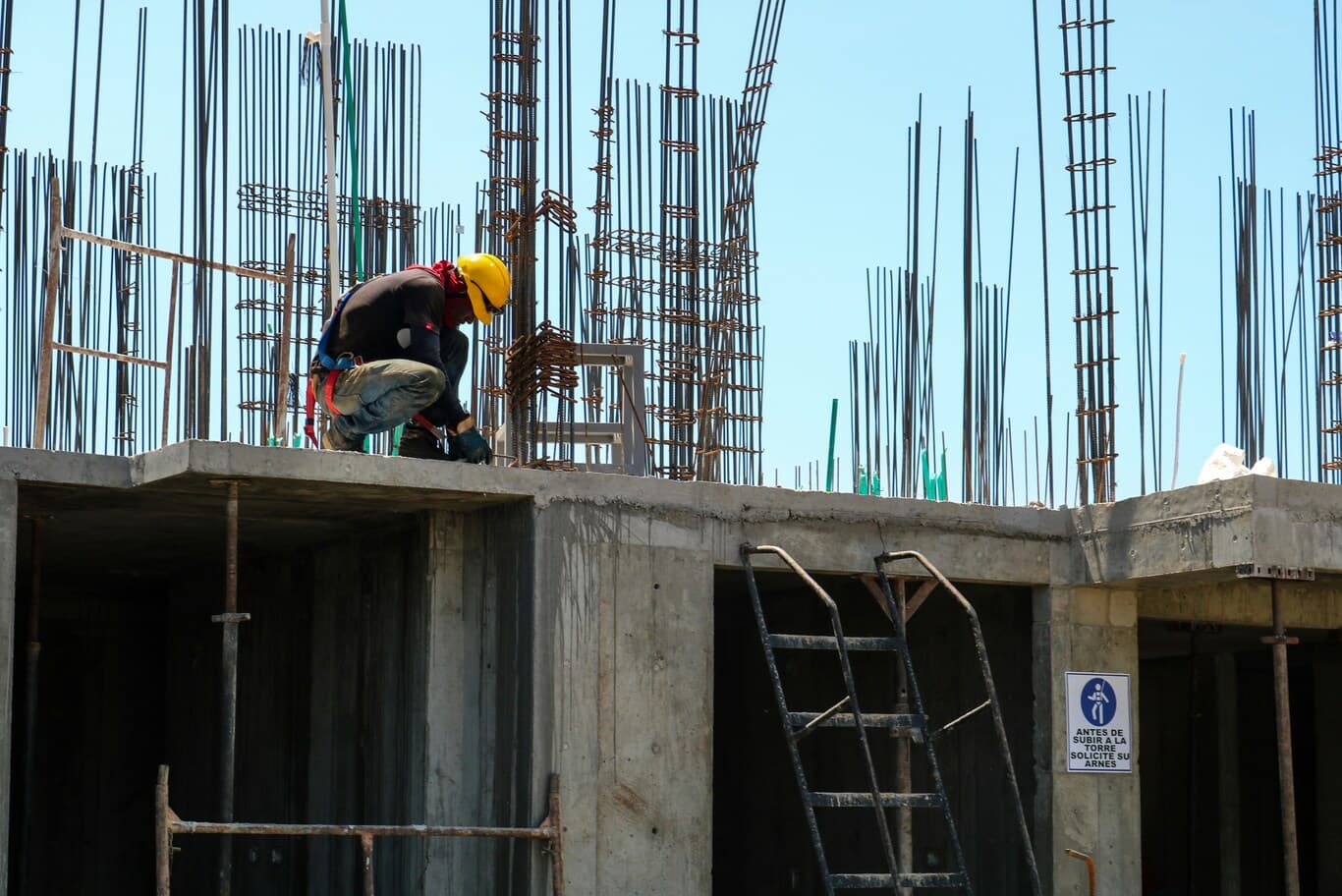
A general contractor (GC) is appointed to deliver the physical construction of a project. The GC takes a completed — or substantially completed — design from the consultant and assumes responsibility for building it within an agreed contract sum, to the specified quality standard, and by the agreed completion date. Capital Associated's general contracting service covers the full range — from high-rise structural shell and core delivery and multi-family residential towers through to luxury villa construction and comprehensive civil works across Dubai, Abu Dhabi, and Sharjah.
The GC enters into a single contract with the client. That contract is typically lump sum or remeasurable, and the GC assumes the risk of delivering within the agreed price. The GC self-performs some trades and subcontracts the remainder, managing the full supply chain. The client deals with one party throughout the construction phase.
A general contractor's core responsibilities cover:
Mobilising site and establishing safety management systems, traffic management plans, and DM-required site hoardings and signage. Procuring, appointing, and coordinating all specialist subcontractors — structural, MEP, finishes, external works. Conducting and tracking the construction programme, managing float and critical path. Administering the quality management system, carrying out inspections, and maintaining inspection and test plans (ITPs). Submitting for authority inspections at defined construction milestones — DM structural inspections, DCD fire safety commissioning, DEWA energisation. Managing the client's contract administration process — submitting valuations, change orders, and extension of time claims.
The GC's relationship with the client is fundamentally adversarial in structure, even when it functions collaboratively in practice. The GC has assumed risk at a fixed price. Every scope change, delay, or unforeseen condition that falls within the GC's risk allocation is a potential commercial dispute. This is the structural reality of lump-sum contracting, and it shapes every interaction between client and contractor on a traditional GC-led project. A deeper breakdown of how general contractors manage these dynamics across complex builds is covered in the guide on the role of a general contractor in complex projects.
What a Construction Manager Does
A construction manager (CM) acts as the owner's professional representative throughout the project. Depending on the contract structure adopted, the CM may or may not assume financial risk. In both cases, the CM's orientation is toward the owner's interests — cost, programme, quality, and risk — rather than toward protecting a fixed price.
Construction managers are typically appointed early, often before the design phase begins, while general contractors come on board after the design is complete. This early appointment is the most important practical distinction. A CM brought in at feasibility stage can influence structural decisions, procurement strategy, authority approval sequencing, and programme logic before any of these become fixed. A GC appointed post-design cannot.
A construction manager's core responsibilities cover:
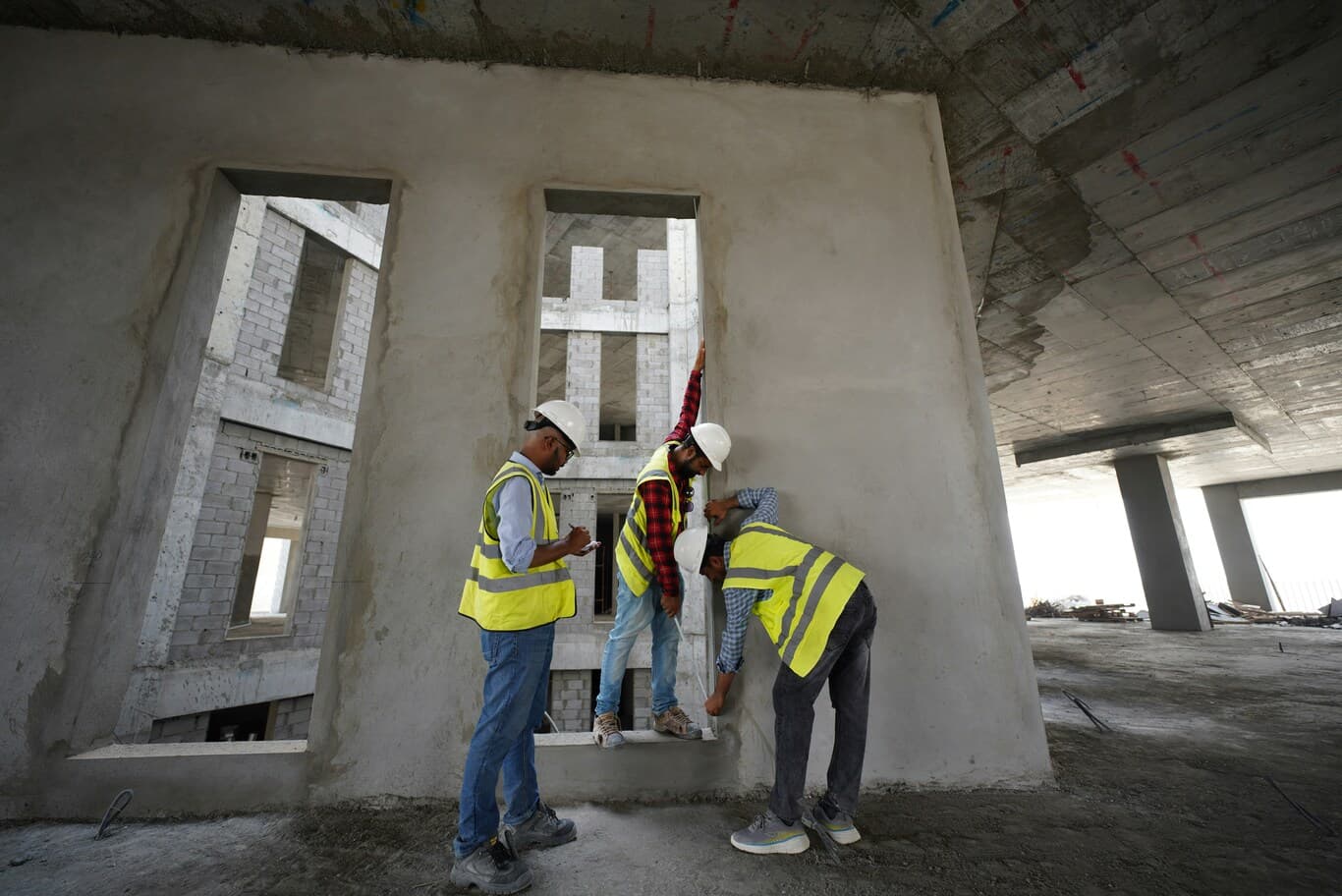
Pre-design: conducting feasibility assessments, preparing initial cost plans, advising on delivery strategy, sequencing authority approvals, and managing the consultant appointment process. Design stage: reviewing design packages for buildability, pricing accuracy, and value engineering opportunities; coordinating between architect, structural engineer, and MEP consultant; preparing procurement packages. Procurement: running tender processes for specialist subcontractors and trade packages; evaluating bids on quality as well as price; recommending appointments to the owner. Construction: overseeing all contractors on behalf of the owner, conducting progress meetings, monitoring cost against budget, managing change, and reporting to the owner in real time. Completion: managing commissioning, testing and commissioning, snagging, authority inspections, and handover documentation.
The CM does not self-perform construction work. The CM manages those who do. For a detailed look at how construction management translates into on-site programme and cost discipline, the role of project management in construction success covers the discipline from pre-construction through to handover.

The Two Construction Management Contract Models
Construction management in Dubai operates under two distinct contractual frameworks, and the difference between them is material.
Agency Construction Management
In agency CM (also called pure CM or consultancy CM), the construction manager acts as the owner's agent and advisor throughout the project. The owner holds the direct contracts with each specialist subcontractor and trade contractor. The CM advises, coordinates, and manages, but carries no financial risk for construction cost overruns.
Agency CM works well for sophisticated owners with in-house development expertise who want maximum control and transparency over procurement and cost. It requires the owner to have the bandwidth and capability to hold multiple contracts directly. It is the model commonly used by large developers and institutional investors in Dubai who run active development programmes — the CM is essentially an extension of their in-house project management team.
The fee structure for agency CM is straightforward: a fixed professional fee or a percentage of construction value, typically ranging from 2% to 8% depending on project size and complexity, with larger projects attracting lower percentage rates.
Construction Management at Risk (CMAR)
In CMAR, the construction manager gives the owner a Guaranteed Maximum Price (GMP) before bidding the project to specialist subcontractors. The CM then assumes the financial risk of delivering within that GMP — if trade bids come in above the GMP, the CM absorbs the overrun. If final costs come in below the GMP, the savings are shared between owner and CM according to the contract terms.
CMAR combines the early appointment and owner-aligned orientation of construction management with the cost certainty that is normally only available through a fixed-price GC contract. The CMAR approach requires the construction manager to commit to delivering the project within a Guaranteed Maximum Price, which shifts some financial risk from the owner to the construction manager while preserving the benefits of early involvement.
CMAR is increasingly used in Dubai for complex, phased projects where the owner wants cost certainty but also needs the CM involved during design to drive value engineering and authority approval efficiency. The GMP is typically established after schematic design is complete and before full detailed design — early enough that the CM can influence cost-bearing decisions, late enough that the design is sufficiently developed to price with confidence.
The fee structure for CMAR is more complex: a pre-construction services fee during the design phase, followed by a construction management fee (typically 4% to 12% of the GMP, depending on project complexity and the scope of the CM's self-performed work), plus an agreed pain/gain share mechanism on the GMP.
Key Differences: GC vs CM Side by Side
Appointment Timing
The general contractor is appointed after design is complete or substantially complete. The procurement process — preparing tender documents, issuing to tenderers, receiving and evaluating bids, negotiating and awarding — takes eight to sixteen weeks for a typical commercial or residential project in Dubai. The GC then mobilises, typically adding another four to six weeks before meaningful construction begins.
The construction manager is appointed at pre-design or early design stage. The CM's value is front-loaded: the cost and programme savings from early CM involvement — buildability reviews, procurement strategy, authority approval sequencing — are captured before ground is broken.
Risk Allocation
The GC assumes the risk of delivering the agreed scope within the agreed price. Weather delays outside the contractor's control, unforeseen ground conditions, and employer-issued variations are typical exceptions to this risk transfer. Everything within the GC's risk envelope is priced into the contract sum — including a risk premium that may or may not be appropriate for the specific project.
Under agency CM, the owner retains construction risk and holds contracts with trade contractors. Under CMAR, the CM takes the GMP risk but remains oriented toward the owner's interests throughout.
Cost Transparency
A GC lump-sum contract gives the owner a headline number but limited visibility into how that number is built up. The GC's subcontract prices, labour costs, and margins are proprietary. Variations are priced against the contract rates, which may bear little relationship to current market rates for the scope in question.
Construction management operates on an open-book basis. The owner sees the trade contractor bids, the CM's fee, the contingency allocation, and the actual costs as they are incurred. Open-book construction management gives owners a level of cost visibility that a lump-sum GC contract structurally cannot provide, making it well-suited to complex or phased projects where scope is still being defined during construction.
Flexibility for Change
Construction projects in Dubai change. Clients evolve their requirements. Market conditions shift. Regulatory updates require design modifications. Under a GC lump-sum contract, every change is a potential cost and programme impact — the GC evaluates the change against its risk position and prices accordingly. Scope reductions rarely produce proportional cost savings.
Under a CM structure, change is managed against actual cost. Adding, removing, or modifying scope has a direct and transparent cost impact because the owner sees trade contractor pricing. For projects with active client involvement and an expectation of design evolution, this transparency is a structural advantage.
Accountability
The GC is accountable for the delivered product — quality, programme, and cost are the GC's responsibility. If the building leaks, the finishes are below specification, or the programme overruns, the GC carries contractual liability. Single-point accountability is the core value proposition of the traditional GC model.
The CM's accountability depends on the contract model. Under agency CM, the CM is accountable for the quality of its management services, but the owner retains contractor risk. Under CMAR, the CM is accountable for GMP delivery as well as management quality.
Fee Structures and Cost Benchmarks: Dubai 2026
Understanding what each model costs is essential for making a rational selection decision. Cost alone should not drive the choice — the wrong model at the wrong fee is more expensive than the right model at a higher fee — but the numbers matter.
General Contractor Contract Sum
A GC lump-sum contract includes all construction costs, subcontract packages, preliminaries, and the GC's overhead and profit margin. In Dubai's current market, preliminary costs for larger projects run at approximately 14%, with smaller projects at 12% according to Turner & Townsend's UAE Market Intelligence 2025. The GC's overhead and profit is embedded within the contract sum and is not separately visible to the client.
For reference cost benchmarks: mid-range commercial construction in Dubai runs approximately USD 1,926 per square metre (Turner & Townsend GCMI 2025), making Dubai one of the more cost-efficient major construction markets globally — significantly below London, Singapore, or Riyadh at USD 3,112 per square metre.
Construction Management Fee
For agency CM, professional fees in Dubai typically range from 2% to 12% of construction value depending on project size and service scope. For large projects (above AED 50 million construction value), fees tend toward the lower end of the range. For complex projects with significant pre-construction service requirements — phased delivery, multiple authority approval jurisdictions, specialist procurement — fees toward the 6% to 8% range are appropriate.
For CMAR, the pre-construction fee covers the CM's involvement during design, typically structured as a fixed monthly retainer or a fixed lump sum for the pre-construction phase. The construction management fee on the GMP portion then runs in addition — typically 4% to 12%, with the specific rate reflecting the CM's risk exposure, the GMP contingency level, and the pain/gain share structure.
For a practical illustration: on a project with a GMP of AED 50 million, a CMAR fee of 7% represents AED 3.5 million in CM fees, with a GMP contingency of perhaps 5% (AED 2.5 million) sitting above that. If the CM delivers below GMP, the owner and CM share the saving. The owner's total exposure is capped at AED 52.5 million before variations — compared to the equivalent uncertainty of a GC lump sum that includes a risk premium the owner cannot see or negotiate.
Which Model Suits Which Project Type
The right procurement model depends on the project's complexity, the owner's sophistication and capacity, the programme constraints, and the degree of design completeness at the time of procurement.
Large Mixed-Use and Hospitality Developments
Projects of this type — tower developments, resort hotels, mixed-use podium and tower schemes — typically involve phased design, multiple specialist subcontract packages, complex MEP coordination, and extended programmes. Construction management, either agency or CMAR, is usually the more appropriate model. The CM is involved during design, shapes the procurement packages to maximise competition in the specialist subcontractor market, and manages the owner's exposure to variation risk across the full programme. For a hotel developer building to brand standards, having a CM manage the interface between the brand's FF&E specifications and the base building contractor is a structural necessity rather than an optional service.
Standard Villa and Residential Construction
For a private client building a villa or a developer building a residential community to a defined specification, a general contractor on a lump-sum or admeasurement contract is typically the appropriate model. The design is relatively well-defined, the subcontract packages are straightforward, and the value of early CM involvement is lower. The GC model provides cost certainty and clear accountability for a product that is well understood. The luxury villa construction process in Dubai follows a clear stage sequence that maps naturally onto the GC appointment model.
Commercial Fit-Out
Commercial fit-out projects in Dubai — particularly Cat B office fit-outs, retail units, and hospitality interiors — are almost always delivered under a general contractor or specialist fit-out contractor model. The scope is defined, the programme is short, and the owner's primary concern is cost certainty and completion within the rent-free period. A CM structure would add overhead and complexity to a delivery model that benefits from simplicity. For more detail on how commercial fit-out procurement works in practice, the Cat A vs Cat B fit-out guide for Dubai covers the delivery sequence in full.
Phased or Fast-Track Projects
Phased projects — where Phase 1 must be completed and operational before Phase 2 begins, or where the owner needs the building completed as quickly as possible to capture market conditions — benefit substantially from construction management. The CM can begin procuring Phase 1 packages before the Phase 2 design is complete, overlapping design and construction in a controlled sequence. A GC appointed to a phased project faces programme uncertainty that creates risk premiums in the contract sum.
Owner-Occupied Commercial and Institutional Buildings
Corporate headquarters, institutional buildings, educational facilities, and owner-occupied commercial properties often benefit from a CM structure because the owner has very specific requirements that evolve through the design process. A CM appointed at the brief stage can translate the owner's operational requirements into procurement specifications, manage the design team to deliver to those specifications, and advise the owner on where their preferences are creating cost or programme risk. A GC appointed at tender stage responds to the specifications they receive — the owner's brief has already been interpreted by the consultant.

Case Study: CMAR Delivery on a Mixed-Use Development, Business Bay
Project context: A regional developer delivering a mixed-use podium and tower in Business Bay comprising ground-floor retail, four floors of serviced offices, and 22 residential floors above. Total construction value: approximately AED 120 million. Programme constraint: the developer had pre-sold the residential floors off-plan and had a contractual handover obligation to buyers.
Why CMAR was selected: The project had three design packages at different stages of completion at the time of procurement — the structural and façade packages were at detailed design stage, the MEP was at schematic, and the residential fit-out specification had multiple variants under discussion with the interior designer. A GC lump-sum tender at that stage would have produced either a heavily qualified tender (with unpriced exclusions covering the incomplete scopes) or an inflated price reflecting the GC's uncertainty. The developer appointed a construction manager to manage the procurement of each package independently as the designs reached tender-ready stage.
GMP structure: The GMP was set after structural and MEP detailed design was complete, covering those packages at defined prices. A separately priced allowance was established for the residential fit-out, with a design allowance for the variants still under review. The GMP contingency was set at 6%.
Outcomes: The structural and MEP packages were procured at 4.2% below the GMP allowance — savings that flowed directly to the developer under the pain/gain share mechanism. The residential fit-out variant was resolved during construction, with the selected specification priced against the design allowance at a 2.1% premium. The project was handed over two weeks before the contracted buyer deadline.
What a GC model would have produced: At the time the CM was appointed, a GC lump-sum tender for the full project would have required the residential fit-out to be resolved before tender — adding eight to twelve weeks to the programme before ground breaking. Given the buyer handover obligation, that programme delay carried a financial penalty exposure that the developer could not absorb. The CMAR structure allowed design and construction to overlap in a controlled way, saving a programme duration that translated directly into avoided penalty exposure.
Case Study: GC Delivery on a Corporate Headquarters, DIFC
Project context: A financial services firm owner-occupying a 4,200 sq ft unit on three floors of a heritage building in DIFC. Scope: full Cat A and Cat B fit-out to a premium specification, including a client reception, trading floor, five private offices, and a boardroom.
Why a GC was selected: The design was 95% complete before tender was issued. The fit-out specification was resolved — the client had reviewed and signed off every finish schedule and FF&E selection before the tender process began. The programme requirement was clear: practical completion within fourteen weeks of contract award. The client's primary concern was cost certainty and a single accountable party for defects liability.
Contract structure: Lump-sum contract with a defined provisional sum for specialist AV and IT infrastructure. The provisional sum was administered by the client's project monitor and valued against trade invoices.
Outcomes: The project was delivered on programme. The lump-sum structure gave the client a firm cost commitment that enabled board-level budget approval before construction started. The single-contract accountability structure meant that when a minor snagging issue arose — a section of acoustic partition underperforming at the specified Rw rating — there was a clear and unambiguous warranty claim route.
What a CM model would have added: Given the design completeness and the client's requirement for single-point accountability, an agency CM structure would have added professional fees without adding meaningful value. The client did not need pre-construction input — the design was done. The client did not want open-book procurement — they wanted a fixed price. The GC model was the right choice for the specific conditions.
How to Decide: A Practical Framework
The following questions produce a reliable answer for most projects.
How complete is the design at the time of procurement? When the design is complete and resolved, a GC lump-sum model is straightforward and appropriate. When the design has unresolved elements or active client input still expected, a CM structure allows procurement to begin before design is finalised.
How much programme flexibility does the owner have? When the handover date is fixed — buyer commitments, lease commencement dates, opening dates — CMAR or agency CM offers programme overlap capability that a GC appointment cannot replicate.
How many specialist packages does the project involve? Projects with five or fewer specialist packages are well-suited to GC delivery. Projects with ten or more specialist packages, particularly in high-rise, hospitality, or mixed-use developments, benefit from the CM's package management and subcontractor oversight capability.
How important is cost transparency? When the owner's primary concern is knowing exactly where every dirham is being spent throughout the project, open-book CM is the structurally appropriate model.
What is the owner's in-house project management capacity? Agency CM requires the owner to be actively engaged in contract administration and decision-making. CMAR and GC models can work with a lower level of owner engagement, though informed owners always get better outcomes regardless of the delivery model. For owners working through the GC selection process specifically, the guide to choosing the best contracting company in Dubai sets out the evaluation criteria in full.
The Role of the Owner's Representative
On projects procured under any delivery model, many Dubai developers and institutions appoint a separate owner's representative (OR) or employer's agent to sit between the owner and the delivery party. The OR reviews valuations, monitors programme, manages contract administration, and protects the owner's interests throughout.
This role is distinct from the construction manager in the CM model but closely related. On a GC project, the OR replaces the independent oversight that a CM would otherwise provide. On a CMAR project, the OR provides a further check on the CM's GMP management and cost reporting.
For owners who are new to the Dubai market or managing a project remotely, an OR appointment adds a layer of on-the-ground oversight that is frequently worth the additional fee. The OR's primary obligation is to the owner — which is structurally different from the GC, whose commercial interests may at times diverge from the owner's. When assessing any contractor before appointment, the five non-negotiable standards for your GC selection RFP provides a tested evaluation framework for the Dubai market.
Capital Associated Building Contracting's construction management service covers both agency CM and contractor-led project management for commercial, hospitality, and residential projects across the UAE, with delivery teams based in Dubai.
Pre-Construction Services: Where Both Models Converge
Regardless of which delivery model is selected for construction, sophisticated owners increasingly commission pre-construction services from a contractor or CM before the main contract is placed. Pre-construction services cover cost planning, buildability reviews, procurement strategy, authority approval coordination, and programme logic development.
In Dubai, the top pre-construction services that guarantee project success — from cost planning and buildability reviews through to authority approval coordination — deliver measurable reductions in the cost of surprises that emerge during construction.
Pre-construction services are available from both GCs (who provide them as an optional pre-tender engagement) and CMs (for whom they are a core service offering). The fee is typically a fixed lump sum or a daily rate, and is usually credited against the main contract fee if the same party is appointed to deliver the project.
Frequently Asked Questions
What is the main difference between a construction manager and a general contractor in Dubai? A general contractor is appointed to physically build the project under a single contract, taking responsibility for delivering within an agreed price. A construction manager is appointed to manage the project on the owner's behalf — overseeing design, procurement, and construction — and is typically brought in earlier, before the design is complete. The GC assumes construction risk; the CM (under an agency model) does not.
When should I appoint a construction manager instead of a general contractor? Construction management is more appropriate when the design is incomplete or subject to change at the time of procurement; when the project has a complex programme with multiple phased packages; when the owner wants cost transparency and open-book procurement; or when the project involves significant pre-construction coordination with authorities, consultants, or specialist subcontractors.
What is CMAR and is it used in Dubai? CMAR (Construction Manager at Risk) is a delivery model in which the construction manager commits to a Guaranteed Maximum Price and assumes the risk of delivering within it. It combines the early appointment and owner-aligned orientation of construction management with the cost certainty of a fixed-price contract. CMAR is used in Dubai on complex commercial, mixed-use, and hospitality projects where design completeness and programme constraints make a pure GC lump-sum approach impractical.
What fees should I expect to pay for construction management in Dubai? Agency CM fees in Dubai typically range from 2% to 8% of construction value depending on project size and service scope. CMAR fees cover a pre-construction services fee during the design phase followed by a construction management fee of 4% to 12% of the GMP during construction. The pain/gain share mechanism under CMAR means that efficient CM performance can reduce the effective fee below the headline rate.
Can a general contractor also provide construction management services? Many general contractors offer pre-construction services and construction management capabilities alongside their main contracting business. The key question is whether the party appointed is contractually orientated toward the owner's interests or toward protecting its own risk position. A GC providing CM-style services under a lump-sum contract is still a GC — the contract structure determines the risk allocation and orientation, not the job title.
Does the choice of delivery model affect the Dubai authority approval process? Yes, meaningfully. A CM appointed during design can shape the authority approval strategy, manage the consultant appointment process, and coordinate DM, DCD, and DEWA submissions in a structured programme. A GC appointed after design inherits the approval structure already established by the consultant team. On complex projects in multiple authority jurisdictions — DIFC, mainland DM, and DEWA, for example — early CM involvement can reduce the total approval timeline by managing parallel submissions rather than sequential ones.
What should I look for when selecting a construction manager in Dubai? Confirm the CM's experience with the specific project type — a CM with a strong commercial fit-out track record may not have the subcontractor network for a high-rise residential tower. Request the CM's fee structure and cost reporting methodology. Ask for references from owners on completed projects of comparable value and complexity. Confirm the CM's understanding of the relevant authority approval requirements for the project's location and building type.
Contact Us
Capital Associated Building Contracting LLC is a licensed general contractor and construction management firm in Dubai, delivering general contracting, CMAR, and agency CM services for commercial, hospitality, mixed-use, and residential projects across the UAE. Delivery teams are based in Dubai with active projects across the mainland and free zone jurisdictions.
Planning a project in Dubai and evaluating your delivery options? Contact the Capital Associated team for a no-obligation consultation on the right procurement model for your build.