
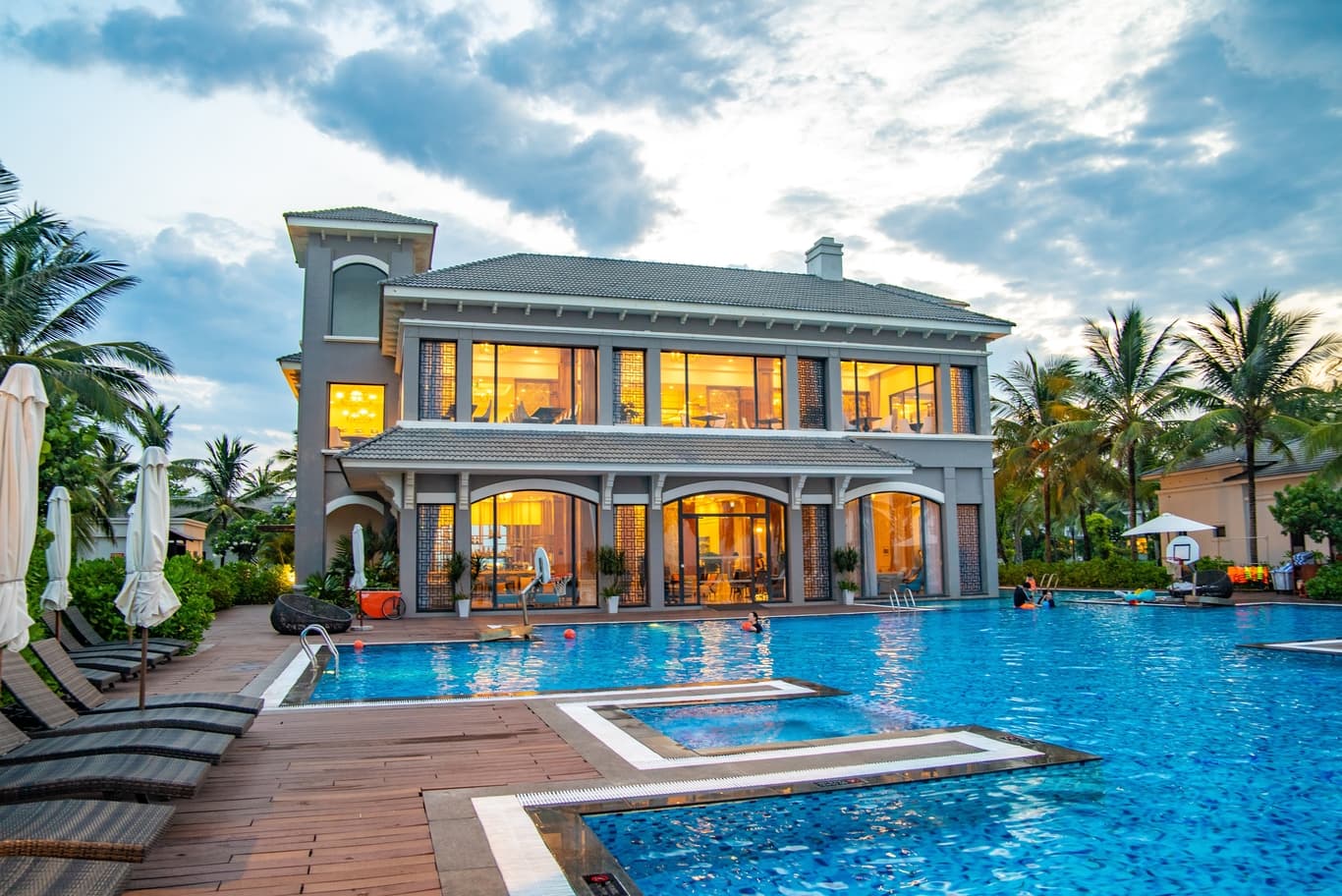
Outdoor living construction for Dubai villas covers structural design, material selection, permits, and trade sequencing on site.
On an 8,500 sq ft landscape build we completed in Tilal Al Ghaf, the grading and drainage infrastructure alone took three weeks before a single paver was laid. Levels had to be set across the entire plot, sub-surface drainage installed to prevent waterlogging on the flat sandy terrain, and utility trenches dug for the outdoor kitchen's gas, water, and electrical feeds — all before hardscaping, the pergola, or any planting could begin. That project is a useful reference point throughout this guide because it touched every element of outdoor living construction: hardscape, pergola, pool, outdoor kitchen, boundary walls, softscaping, irrigation, and lighting.
Outdoor works on a Dubai villa run through the same regulatory, structural, and MEP coordination as the building itself. A pergola needs wind load calculations under the Dubai Building Code (DBC 2021). A terrace slab needs drainage falls engineered into the concrete. An outdoor kitchen needs DEWA-approved gas connections routed to the foul sewer. Every one of these sits on a permit submission, a structural drawing, or an MEP schedule — and missing any of them during the design phase creates rework during construction.
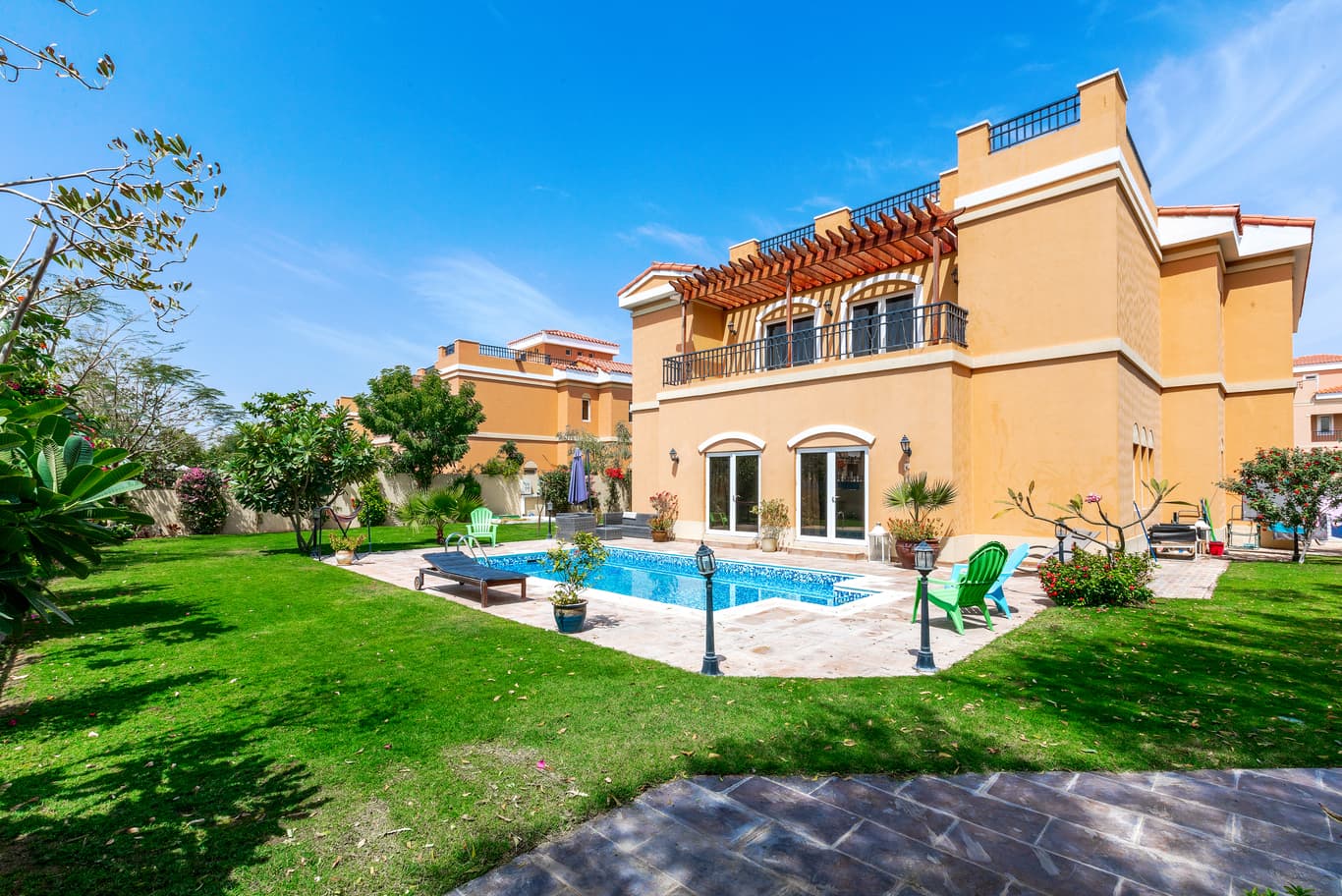
Materials That Survive Dubai's Exterior Environment
Material selection for outdoor construction in Dubai is governed by three environmental factors: UV degradation, thermal cycling (surfaces routinely swing from 20°C overnight to 60°C+ in afternoon sun), and coastal humidity that corrodes unprotected metals within a single season. Choosing materials based on how they look in a showroom rather than how they perform after three Dubai summers is where outdoor projects start failing.
Stone and porcelain for terraces. Natural stone — travertine, limestone, sandstone, granite — remains the dominant terrace finish on villa projects. The specification matters: exterior-rated stone must be tested for water absorption, slip resistance when wet, and thermal shock tolerance. Porcelain pavers have gained traction on projects where colour consistency and lower maintenance outweigh the warmer feel of natural stone. On the Tilal Al Ghaf project, the natural stone was imported with a six-week lead time, so procurement started well before the site was ready for paving — our team tracked that lead time against the programme to avoid the terrace phase sitting idle waiting for materials.
Aluminium, steel, and timber for structures. Aluminium dominates the pergola market in Dubai because it resists corrosion, holds a powder-coated finish in RAL colours without repainting, and handles salt-laden air. Steel is specified where larger spans or heavier loads are required — retractable roof systems, suspended planters, or cantilevered shade structures — but needs hot-dip galvanising or marine-grade coatings. Timber pergolas in iroko, teak, or accoya deliver a natural look but degrade under Dubai's UV within two to three years without regular retreatment. The Tilal Al Ghaf pergola used a steel frame for structural span (clearing the outdoor kitchen and dining zone without intermediate columns) with timber cladding for the aesthetic — combining the structural performance of steel with the visual warmth of wood.
Decking systems. Composite wood-plastic decking is the practical standard for Dubai residential projects: it resists moisture, UV, and insects without annual oiling. Natural hardwood — ipe, cumaru, teak — goes onto projects where the client accepts the maintenance commitment. Both install on aluminium or steel subframes with concealed clips, raised on adjustable pedestals above the waterproofing membrane. Surface temperature is the factor homeowners underestimate until they walk barefoot onto a dark deck in July — composites and hardwoods can hit 65–70°C in direct afternoon sun. Lighter colour profiles, reflective coatings, and orienting the deck away from the western sun exposure make the difference between a deck the family uses year-round and one that sits empty from May to October.
For deeper specification guidance on natural stone and hardscape materials, we published a guide to decorative stonework in villa garden projects that covers sourcing, laying patterns, and performance in the UAE climate.
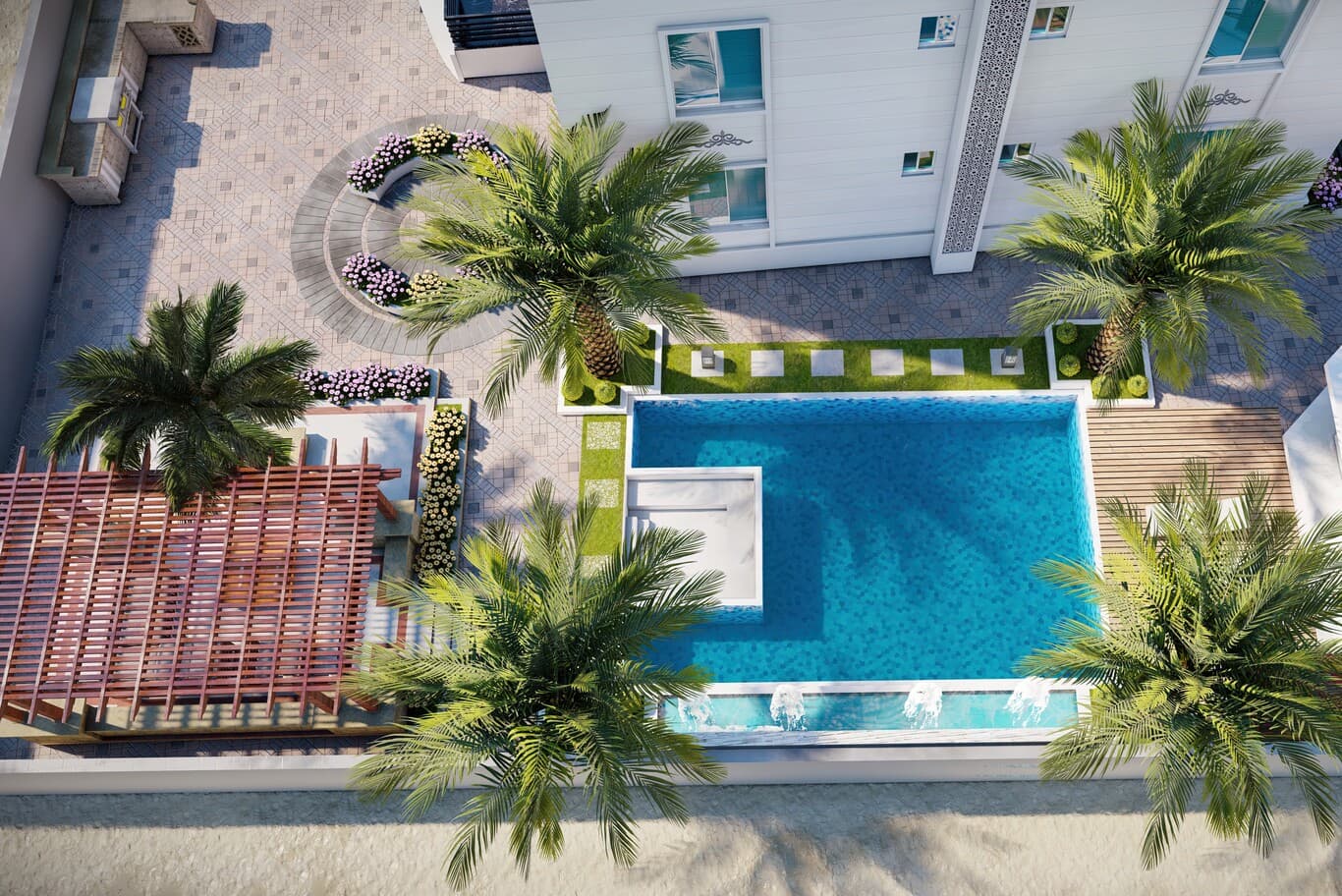
Pergolas: Engineering, Permits, and Roof Systems
Pergolas are the most regulated outdoor structure on a Dubai villa plot. Any fixed pergola exceeding 20 square metres or 3 metres in height requires a building permit from Dubai Municipality or the Dubai Development Authority, depending on the plot's jurisdiction. Below those thresholds, the master developer's community management authority in communities like Dubai Hills, Tilal Al Ghaf, Arabian Ranches, or Emirates Hills still requires a No Objection Certificate before construction can start.
The DBC 2021 classifies pergolas as lightweight outdoor shading structures, which means they are excluded from the plot's total built-up area calculation — a pergola does not eat into your permitted floor area ratio. But the structural engineering requirements still apply in full. Administrative Resolution No. 37 of 2021 sets the minimum design wind load for steel structures in Dubai at 1 kN/m². For a pergola carrying a louvred or solid roof panel, the closed-condition wind uplift and lateral forces must be calculated, and the foundation — pad footings or anchor plates to an existing slab — must resist those loads with adequate safety margins.
Motorised louvre systems are increasingly common on Dubai villa projects because they give the homeowner control over shade, airflow, and rain protection from a single structure. The louvre blades rotate to block direct sun, open for ventilation, or close flat for a weatherproof ceiling. The mechanical layer — motors, rain sensors, integrated drainage channels within the frame profiles — adds weight and wind area that must be accounted for in the structural design. The closed-blade wind load is significantly higher than the open-blade condition, which is why the louvre system specification needs to be confirmed before the pergola frame is engineered, not selected after the frame is built.
On the Tilal Al Ghaf build, the pergola's structural calculations, the community NOC submission, and the DM permit package were all completed months before the steel frame was fabricated. The frame was manufactured off-site to tolerances that matched the stone terrace levels, delivered, and erected in two days. That timeline only works when the permit and engineering are done early — if the NOC gets submitted after construction starts, the pergola sits as an unapproved structure on the plot, which creates problems at community inspection.
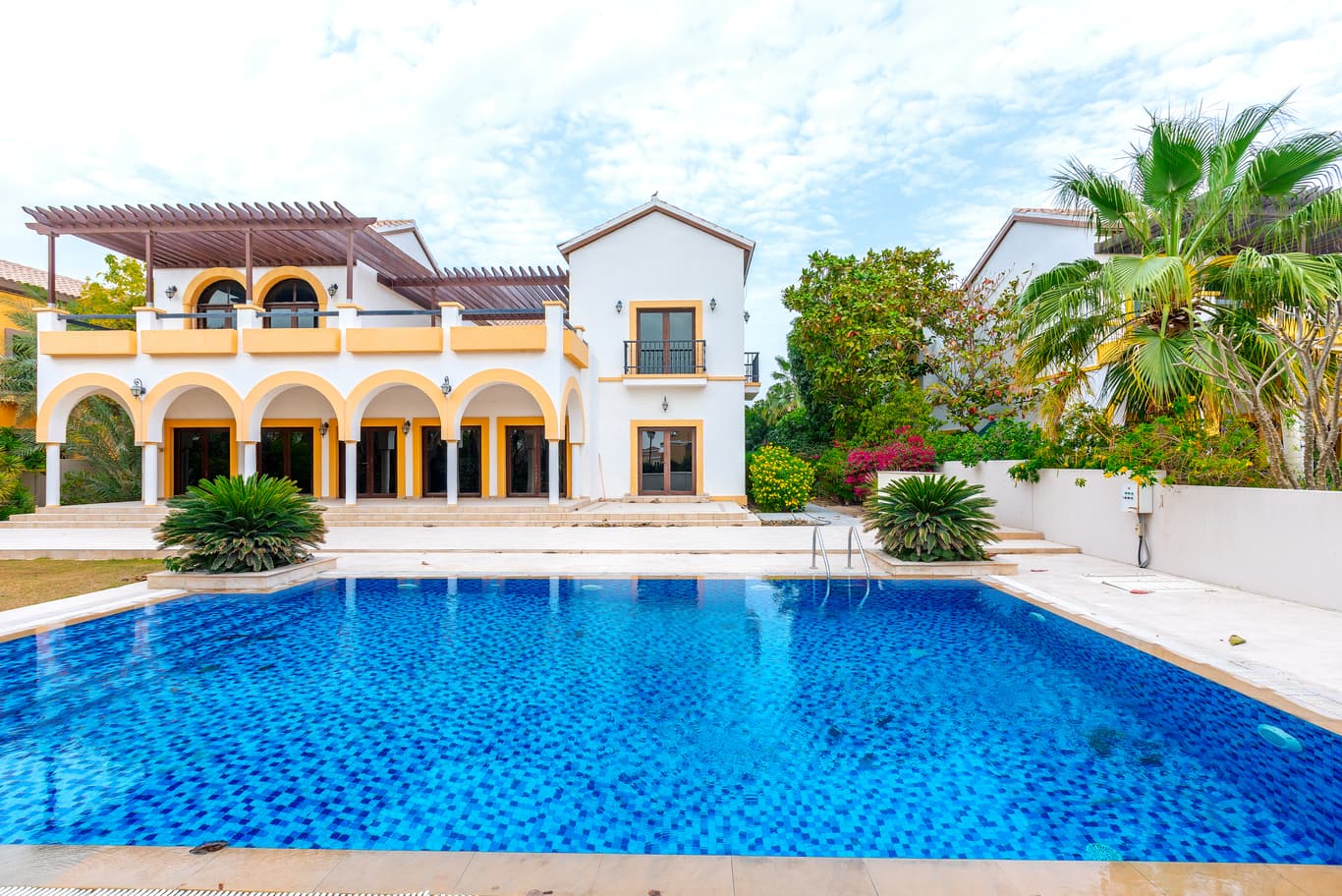
Terraces, Drainage, and the Detail That Gets Missed
Drainage fall is the single most underspecified element on villa terraces in Dubai. A minimum 1.5% to 2% gradient is needed to move surface water to drainage channels or gullies. Without it, water ponds on the stone, creates slip hazards, stains the finish, and in serious cases saturates the substrate and migrates into the villa's structure through the slab joint.
On every terrace we build, the fall is set in the concrete slab itself — screeded to the correct gradient before paving begins. That gives a consistent fall across the full surface instead of relying on variable mortar bed thicknesses, which is how terraces end up with low spots that hold water for days after rain. The Tilal Al Ghaf terrace slab was graded at 2% across the full pool surround and dining terrace, with slot drains at the low edges feeding into the site's sub-surface drainage network. The drainage design was done during the initial groundworks — the same phase that set levels for the pool shell, the boundary walls, and the outdoor kitchen pad.
Both natural stone and porcelain are laid on a mortar bed over the slab, or on a pedestal system that creates a void below for drainage and service access. Pedestal systems are useful where under-terrace access to irrigation lines, lighting cables, or pool pipework might be needed later — but they raise the finished level, which affects door thresholds and step transitions from the villa interior.
Outdoor Kitchens and Utility Coordination
An outdoor kitchen on a villa plot is a permanent masonry or stainless steel structure with gas, water, drainage, and electrical connections — all of which must be trenched and stubbed up during the groundworks phase, before any paving goes down. Trying to route a gas line or drainage connection after the terrace is finished means cutting through the hardscape and patching it, which is visible and expensive.
The Tilal Al Ghaf outdoor kitchen was a masonry unit: granite countertop, built-in gas barbecue, sink with hot and cold supply, under-counter storage, and task lighting under the pergola above. The gas, water, drainage, and electrical feeds were all trenched during the initial groundworks mobilisation and stubbed up at the kitchen location. When the masonry unit was built weeks later, it simply connected to services already in position. That coordination was programmed into the site delivery schedule from the start.
Gas connections for barbecues and fire pits require DEWA approval and must comply with the DBC's LPG installation standards. Sink drainage routes to the foul sewer, not the storm drain. Electrical circuits run in armoured cable to IP65-rated fixtures — the minimum exterior protection rating under UAE regulations. All three need to appear on the MEP drawings before tender, not get figured out on site.
Entertainment and lounge zones. Larger outdoor programmes include sunken seating areas, fire pit surrounds, cinema screen walls, and distributed sound systems. Each adds structural scope (retaining walls for sunken areas, foundations for screen walls), MEP provisions (power and data for AV equipment, gas for fire pits), and coordination with the landscape design. Defining these elements during the design phase — with the architect, the MEP engineer, and the landscape designer in the same room — prevents the change orders that appear when someone decides to add a fire pit after the gas line has already been terminated.
Approvals: DM, DDA, and Community NOCs
Outdoor construction requires a layered permit process. Any structural addition — pergolas, boundary walls, outdoor kitchens with gas, raised deck structures — needs a building permit submitted through DM's online permit system for plots under Dubai Municipality jurisdiction, or through the DDA portal for DDA-managed zones. The submission package includes architectural drawings of the proposed works, structural calculations where applicable, and MEP documentation for utility connections. DM's permits and building control division reviews for compliance with the DBC before issuing approval.
In master-planned communities, the developer's community management team runs a parallel approval process with its own design guidelines: materials, colours, maximum heights, boundary setbacks, equipment noise limits, and lighting spill restrictions. The NOC application often needs concept drawings, material samples, and 3D context renders. Community approval frequently takes longer than the DM permit, so both submissions should run in parallel from the earliest design stage.
For a walkthrough of how DM, DEWA, Civil Defence, and community approvals interact across different construction scopes, we covered the coordination between Dubai's permitting authorities in a dedicated guide.
Water, Energy, and Sustainable Outdoor Design
Dubai Municipality's Green Building Regulations set minimum water and energy performance benchmarks for buildings. The principles carry directly into outdoor works — particularly irrigation, lighting, and plant specification.
Irrigation. Treated sewage effluent (TSE) is the standard supply in most master-planned communities and cuts the homeowner's irrigation water bill substantially versus mains supply. Drip systems zoned by plant type — trees, shrubs, and ground cover on separate circuits with different run times — minimise waste. Smart controllers adjusting schedules against seasonal evapotranspiration rates push consumption down further. The Tilal Al Ghaf irrigation ran on the community TSE line with zoned circuits and a smart timer, which is standard specification on our projects delivered under green building principles.
Plant selection. Date palms, bougainvillea, jasmine, frangipani, and low-water ground covers are proven in the UAE climate and form the backbone of a planting scheme that survives summer without excessive watering. Larger specimen trees need craning into position and staking against wind displacement during the establishment period. On the Tilal Al Ghaf project, the planting palette was selected around species that could establish on the TSE supply without supplementary mains irrigation once the root systems matured.
Lighting. LED is standard, but the specification extends beyond the lamp type. All external circuits run in armoured cable to IP65-rated fixtures. The layout addresses task lighting (kitchen counters, step edges, pool surrounds), safety requirements, and ambient design (tree uplighting, facade washing, pathway definition). At Tilal Al Ghaf, the outdoor lighting scheme was coordinated with the villa's interior designer so the colour temperature and intensity transitioned smoothly through the sliding door openings at night — a detail that only works when the landscape contractor and the fit-out team are sharing drawings.
For outdoor design on tighter plots where every square metre carries multiple functions, we covered layout strategies for compact villa gardens separately.
Sequencing Outdoor Works Within the Villa Programme
The build order for outdoor living construction is fixed, and deviating from it costs money.
Grading and sub-surface drainage come first — levels set, drainage routes installed, base prepared for all future paved surfaces. Pool shell construction, if in scope, follows immediately while the site is still open for excavators and concrete pumps. Utility trenching for the outdoor kitchen, lighting, irrigation, and water features runs during this same groundworks window. Hardscaping — slab or compacted aggregate base, then stone or porcelain — comes next. Pergola and structural elements install onto the finished hardscape so they tie into the surrounding surface levels cleanly. Softscaping and planting close out the programme, once there is no risk of heavy machinery or material deliveries crossing planted areas.
Reversing any part of that order creates rework. Paving before the pergola foundations are in means cutting around posts instead of running stone cleanly to them. Planting before the hardscape is done means plants get crushed by material pallets and foot traffic. Trenching a gas line after the terrace is paved means sawcutting, patching, and a visible repair line in the finished surface.
On the Tilal Al Ghaf scope, the pool shell went in first while ground access was open, utility trenching ran during the same mobilisation, hardscaping followed once the sub-base was compacted and cured, the pergola and outdoor kitchen installed onto the finished terrace, and planting closed the programme. One sequence, no rework, no surface opened twice.
Villa owners with a pool in the outdoor brief will find the construction and permit detail covered in our pool construction guide for Dubai villas. And for context on where outdoor works sit within the wider phases of a new villa build, that guide maps the full programme from consultant appointment to handover.
What Outdoor Living Construction Costs in Dubai
Costs depend on scope, materials, and site conditions. These ranges reflect current pricing on our villa projects and do not include pool construction, which is quoted separately.
A terrace and pergola package — 50 to 80 sqm of natural stone paving, a 20 sqm aluminium pergola, pathway lighting, basic planting — runs AED 120,000 to AED 250,000.
A mid-range programme — 100 to 150 sqm of hardscaping, a motorised louvre pergola, an outdoor kitchen with full utility connections, boundary walls, irrigation, and lighting — sits between AED 300,000 and AED 550,000.
A comprehensive scope at the Tilal Al Ghaf scale — 8,500 sq ft of hardscape, pool, outdoor kitchen, pergola, boundary treatments, softscaping, irrigation, and lighting — ranges from AED 500,000 to AED 900,000 or more depending on material specification and pool type. On that project, each trade package — stone paving, pool shell, kitchen build, pergola fabrication, planting — was tendered and managed as a separate line item within the overall villa delivery contract, giving the client cost visibility across every element rather than a single opaque lump sum.
Defining the scope in full during the design phase is what holds the budget. Every element added mid-construction — a fire pit that needs a gas run, a cinema wall that needs power and data, an extra lighting zone — arrives as a change order with premium pricing because the groundworks window has already closed.
Start During Design
Outdoor living works need to enter the project scope alongside the villa's own design programme. The utility planning, the permit submissions, the material procurement with its lead times — all of it needs a runway. Capital Associated delivers outdoor construction as an integrated part of the villa build, sequencing hardscape, structures, planting, and pool works against every other trade on site so the programme runs once, in order, without surfaces opened twice.
Frequently Asked Questions
Do I need a permit to build a pergola at my Dubai villa?
Any fixed pergola exceeding 20 square metres or 3 metres in height requires a building permit from Dubai Municipality or the DDA. Below those thresholds, community-level approval from the master developer is still required in most managed villa communities. The DBC 2021 classifies pergolas as lightweight outdoor shading structures excluded from built-up area calculations, but structural and safety compliance still applies in full.
How long does outdoor living construction take for a Dubai villa?
A mid-range scope — hardscaping, pergola, outdoor kitchen, planting, lighting — takes eight to fourteen weeks on site, not counting six to ten weeks of design and permit work beforehand. Larger scopes with pool construction, extensive boundary works, and imported materials extend to sixteen to twenty weeks on site. The design and permit phase is the part that catches most homeowners off guard.
What decking material holds up best in Dubai?
Composite wood-plastic decking offers the strongest combination of durability and low maintenance. It resists UV, moisture, and insect damage without annual treatment. Natural hardwood (ipe, teak, cumaru) looks warmer but needs regular oiling and sanding. Both should sit on raised pedestal systems for drainage and airflow. Light-coloured profiles are strongly recommended — dark decking hits 65–70°C in summer sun.
How much does outdoor living construction cost for a Dubai villa?
A basic terrace and pergola package costs AED 120,000 to AED 250,000. A mid-range programme with an outdoor kitchen, motorised pergola, and landscaping ranges from AED 300,000 to AED 550,000. Comprehensive scopes including pool construction can exceed AED 900,000. Pool costs are typically a separate line item.
Can I build an outdoor kitchen with gas at my villa?
Yes, but the gas connection needs DEWA approval and must meet the Dubai Building Code's LPG standards. Sink drainage must route to the foul sewer, not the storm drain. Electrical circuits for outdoor kitchens must use armoured cable to IP65-rated fixtures. All utility feeds should be trenched during the groundworks phase — routing them after hardscaping is finished means cutting through completed surfaces.
What planting survives Dubai summers in outdoor living areas?
Date palms, bougainvillea, jasmine, frangipani, and low-water ground covers form the core of a practical UAE planting scheme. TSE irrigation supply, standard in most master-planned communities, reduces ongoing water costs substantially. Smart controllers that adjust watering by seasonal temperature further cut consumption and keep established planting healthy through peak summer.